The Guggenheim Bilbao: Architecture as Urban Transformation
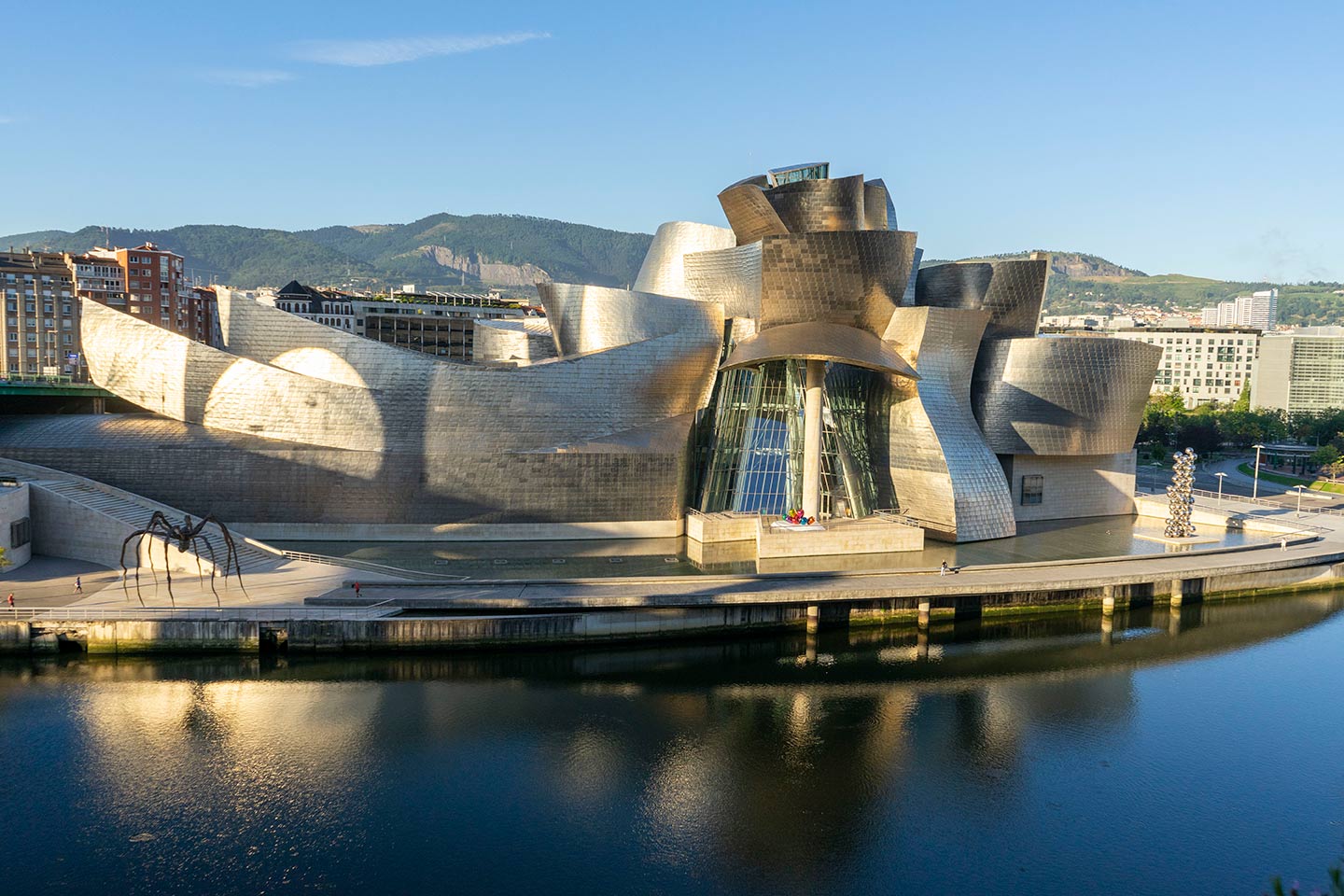
When the Guggenheim Museum Bilbao opened in 1997, it instantly became one of the most recognizable buildings in the world.
But beyond its iconic image, the building represents something far more important for architecture: a radical shift in how a single project can redefine a city.
Designed by Frank Gehry, the Guggenheim Bilbao is not just a museum—it is an experiment in form, structure, materiality, and urban impact that continues to influence architecture decades later.

Architecture Before the Image
The Guggenheim Bilbao is often reduced to its sculptural appearance. However, its true architectural value lies in how form, structure, and program work together.
The building rejects:
-
Symmetry
-
Orthogonal grids
-
Traditional museum typologies
Instead, it embraces:
-
Fragmentation
-
Curved geometries
-
Continuous spatial flow
This was not formal caprice. Gehry’s design responds directly to site, scale, and movement.
Relationship with the City and the River
One of the most architecturally intelligent aspects of the Guggenheim Bilbao is its urban positioning.
The building sits along the Nervión River, acting as:
-
A mediator between city and water
-
A transition between industrial past and cultural future
-
A landmark without overpowering surrounding urban fabric
Rather than standing isolated, the museum folds itself into the city, allowing pedestrians to move around, under, and alongside it.
Architecture here is not an object—it is urban infrastructure.
Materiality: Titanium as Architectural Strategy
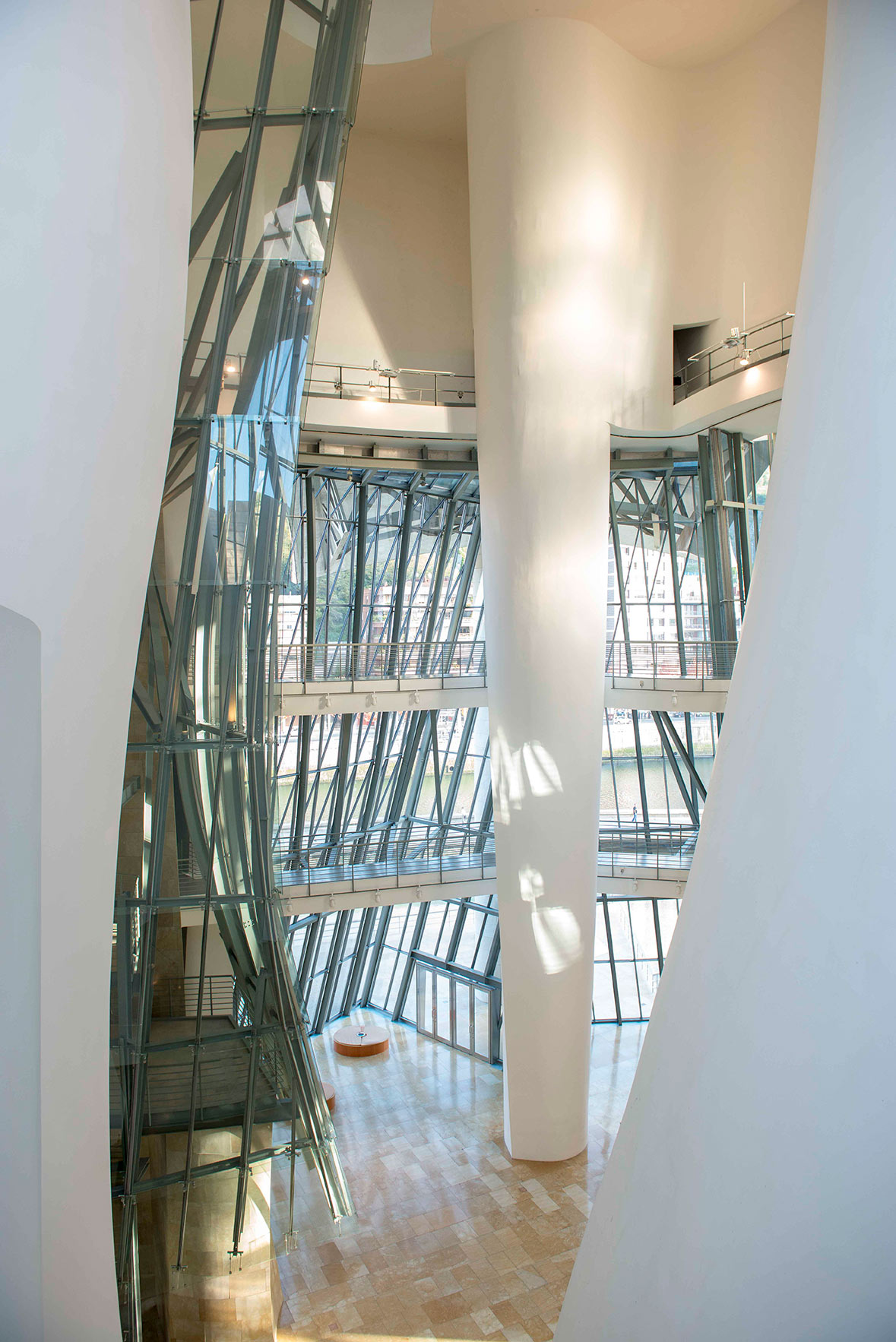
The museum’s most famous feature is its titanium façade, composed of thousands of thin metal panels.
From an architectural perspective, this choice is critical:
-
Titanium is lightweight yet durable
-
It reflects light differently depending on weather and time
-
It allows curved geometries without excessive structural weight
The façade is not decorative—it is performative.
It transforms the building throughout the day, making architecture dynamic rather than static.
Structure and Digital Design
The Guggenheim Bilbao was one of the first major buildings to rely heavily on digital modeling for its construction.
Gehry’s team used advanced software to:
-
Translate complex curves into buildable geometry
-
Coordinate structure, envelope, and interior spaces
-
Control costs on an otherwise “irrational” form
This project marked a turning point where digital tools became central to architectural practice, especially for complex forms.
Interior Space: A Museum Without a Fixed Path
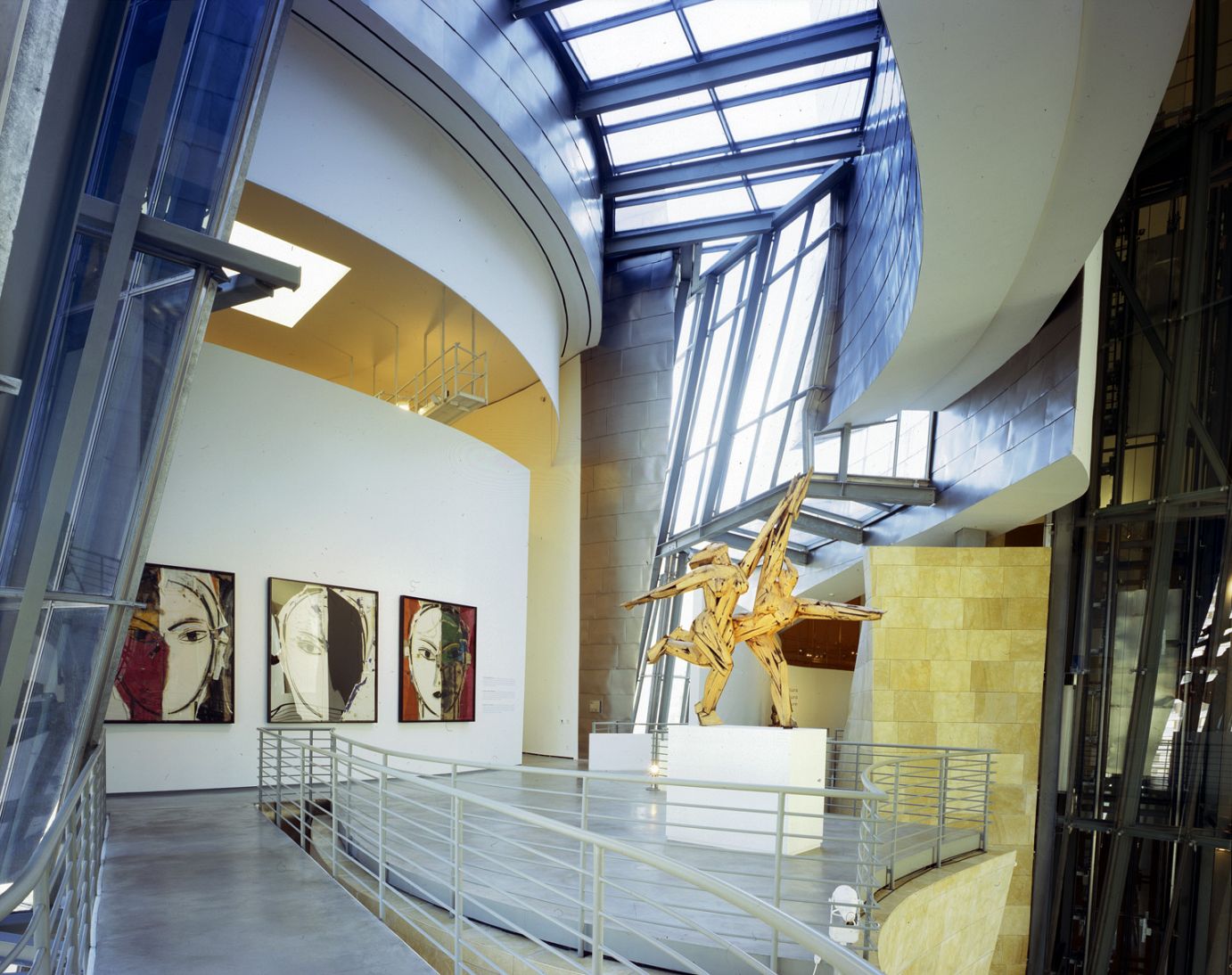
Inside, the Guggenheim challenges traditional museum circulation.
Instead of linear galleries, it offers:
-
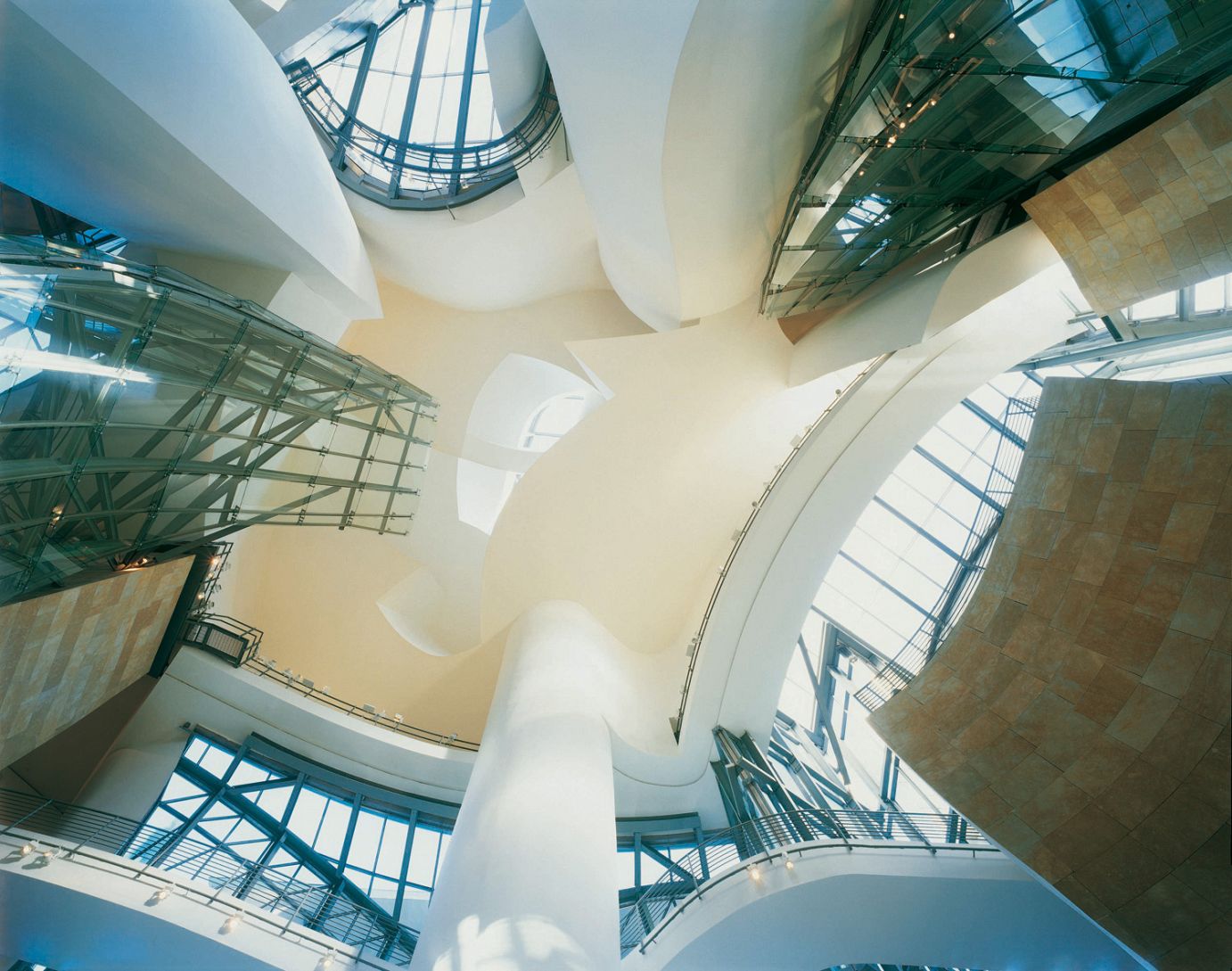
A massive central atrium
-
Radial gallery organization
-
Varying ceiling heights and spatial scales
This allows exhibitions to adapt to the architecture rather than the architecture adapting to exhibitions.
The building becomes an active participant in how art is experienced.
The “Bilbao Effect”: Architecture as Economic Catalyst
From an architectural standpoint, the so-called Bilbao Effect is both celebrated and criticized.
What cannot be denied is that the building:
-
Triggered urban regeneration
-
Attracted global attention
-
Shifted Bilbao’s identity from industrial city to cultural destination
This raised a crucial architectural question still debated today:
Can architecture truly transform cities—or is this an exceptional case?
Criticism and Architectural Debate
Not all architects praise the Guggenheim Bilbao.
Common critiques include:
-
Iconic architecture overshadowing local context
-
Replication attempts failing elsewhere
-
Architecture becoming branding
Yet even critics acknowledge its technical, spatial, and conceptual importance.
The building forced the profession to confront the relationship between architecture, spectacle, and responsibility.
Why the Guggenheim Bilbao Still Matters in 2025
Nearly 30 years later, the building remains relevant because:
-
It redefined museum architecture
-
It changed how cities view cultural investment
-
It influenced generations of architects
-
It proved that form, when rigorously designed, can coexist with function
In an era dominated by parametric design and digital fabrication, the Guggenheim Bilbao stands as one of the first true digital-era buildings.
Conclusion
The Guggenheim Bilbao is not important because it is famous.
It is famous because it is important.
Architecturally, it represents a moment when:
-
Technology enabled new forms
-
Architecture reshaped a city
-
A building became a catalyst rather than an object
It remains one of the clearest examples of how architecture, when thoughtfully executed, can transcend its program and redefine its context.
#GuggenheimBilbao #FrankGehry
#IconicArchitecture #MuseumArchitecture
#ContemporaryArchitecture
#ArchitectureLovers #ArchitectureBlog
#ArquitecturaDiaADia


Comentarios
Publicar un comentario